
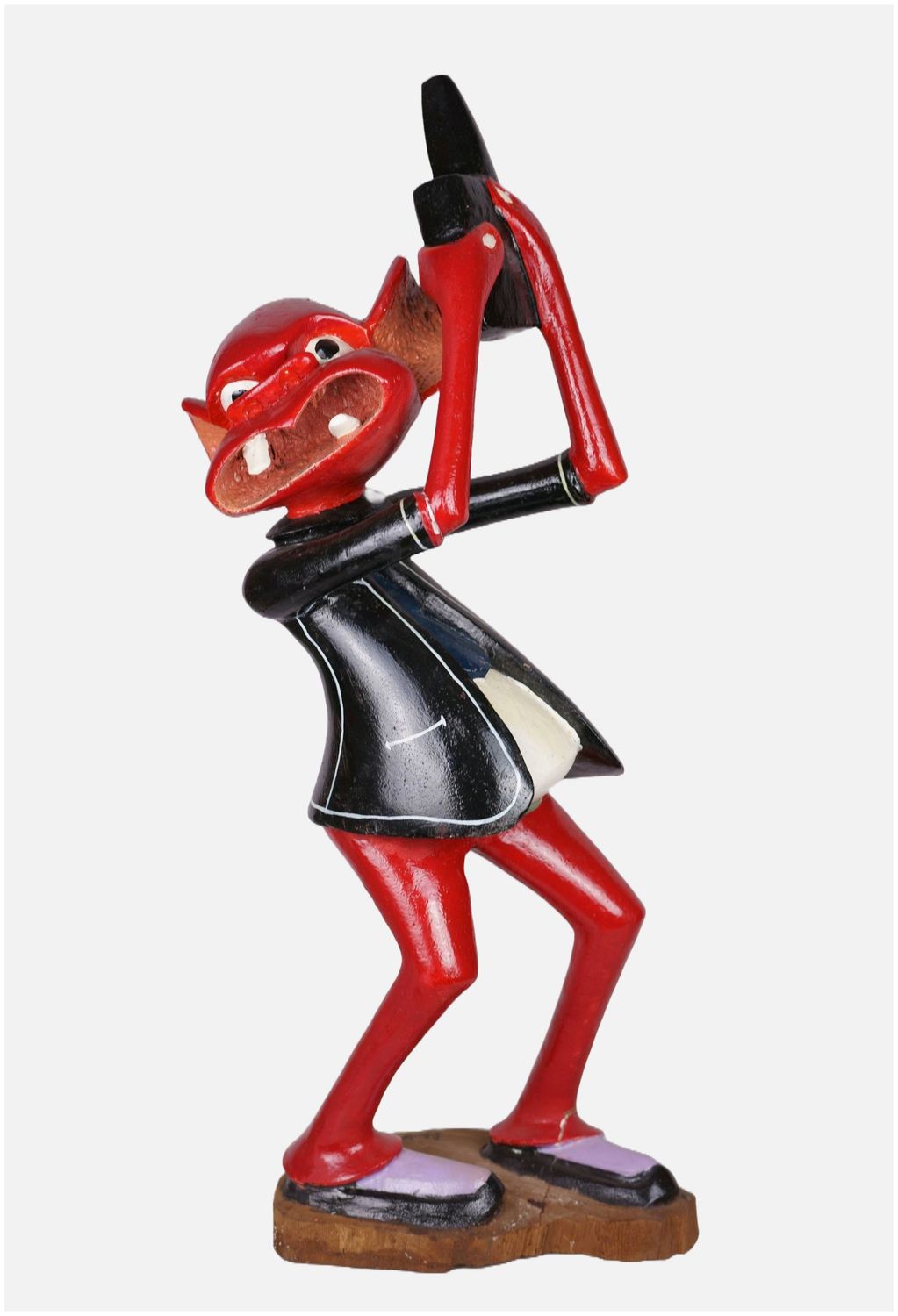
Lilanga, George (1934-2005), Wooden sculpture of a red figure, c. 1995
George Lilanga(1934 Kikwetu - 2005 Dar es Salaam), Sculpture of a red figure , circa 1995. Polychrome wood, 80 cm (height) x 40 cm (width) x 25 cm (depth), signed on the carved base plate.
- Left arm newly fixed, stress crack running through right foot
- The crazy dance of life -
George Lilanga, who originally trained as a Makonde carver, takes up the Shetani spirits belonging to Makonde mythology in this sculpture and creates a bizarre, grotesque figure that looks upward in a dancing movement with its mouth open and two teeth exposed. A permanent state of affect, which is further intensified by the intensely bright colors. Yet the eerie and frightening creature is simultaneously banished and tamed by the artwork, so that it appears almost comical. As a transformation of mythological tradition, the figure holding up what appears to be a cell phone is also a metaphor for one's own existence and the “absurdity” of life, and therefore also a work of modern art.
About the artist
George Lilanga di Nyama (1934-2005) was an important Tanzanian sculptor and painter of the Makonde people and is considered one of the most important representatives of contemporary East African art. After training as a Makonde woodcarver, he moved to Dar es Salaam in 1972 and worked at the Nyumba ya Sanaa art center.
In 1980, he was strongly influenced by the Tingatinga school and developed his own distinctive style based on this. He combined traditional Makonde carving with colourful designs for the first time and created paintings and painted wooden sculptures. His works often depict figures from Makonde mythology (Shetani spirits), but also contain socially critical and caricaturing elements.
Lilanga, considered the “Picasso of Africa,” was a style-defining artist who combined traditional African art with modern individuality.